Biodiversity finance overview: figures from the Finance Resources for Biodiversity (FIRE) database
 Email
Email Linkedin
 Bluesky
 Mastodon
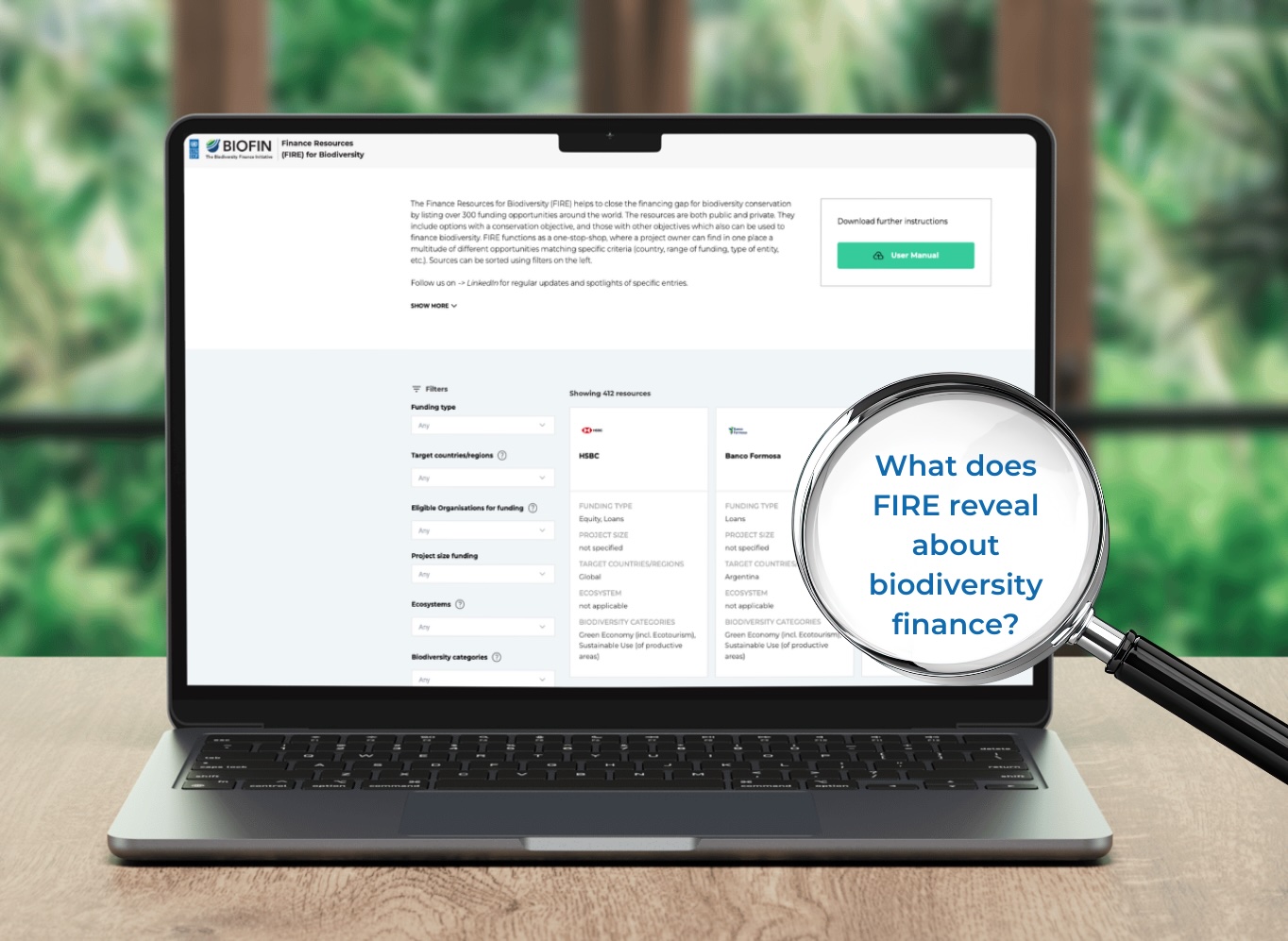
Enterprises, governments, and other individuals seeking funding for biodiversity-related projects often face challenges in finding finance opportunities that match their needs and profiles. As of December 2025, the FIRE database included 404 funding opportunities for a variety of eligible organizations, project themes, funding windows, and targeted ecosystems. Check out this article to understand the characteristics of the opportunities on FIRE.
By Guilherme De Franco
Finance for nature-positive activities reached USD 200 billion in 20221. However, those seeking biodiversity funding, from national governments to community associations, still face challenges in finding opportunities that match their needs and profiles. To address this gap, the Biodiversity Finance Initiative (BIOFIN) of the United Nations Development Programme (UNDP) launched the Finance Resources for Biodiversity (FIRE) database in 2023 — a publicly available platform showcasing funding opportunities around the world. By enabling project owners to access the database and search for funding sources using filters such as funding type and geographic coverage, FIRE plays a key role in connecting investors with potential investees, spreading information to close the biodiversity finance gap.
But how much funding is available? And what are the characteristics of funding opportunities? This article summarizes key statistics from FIRE as of December 2025, contributing to an assessment of the state of biodiversity finance[2].
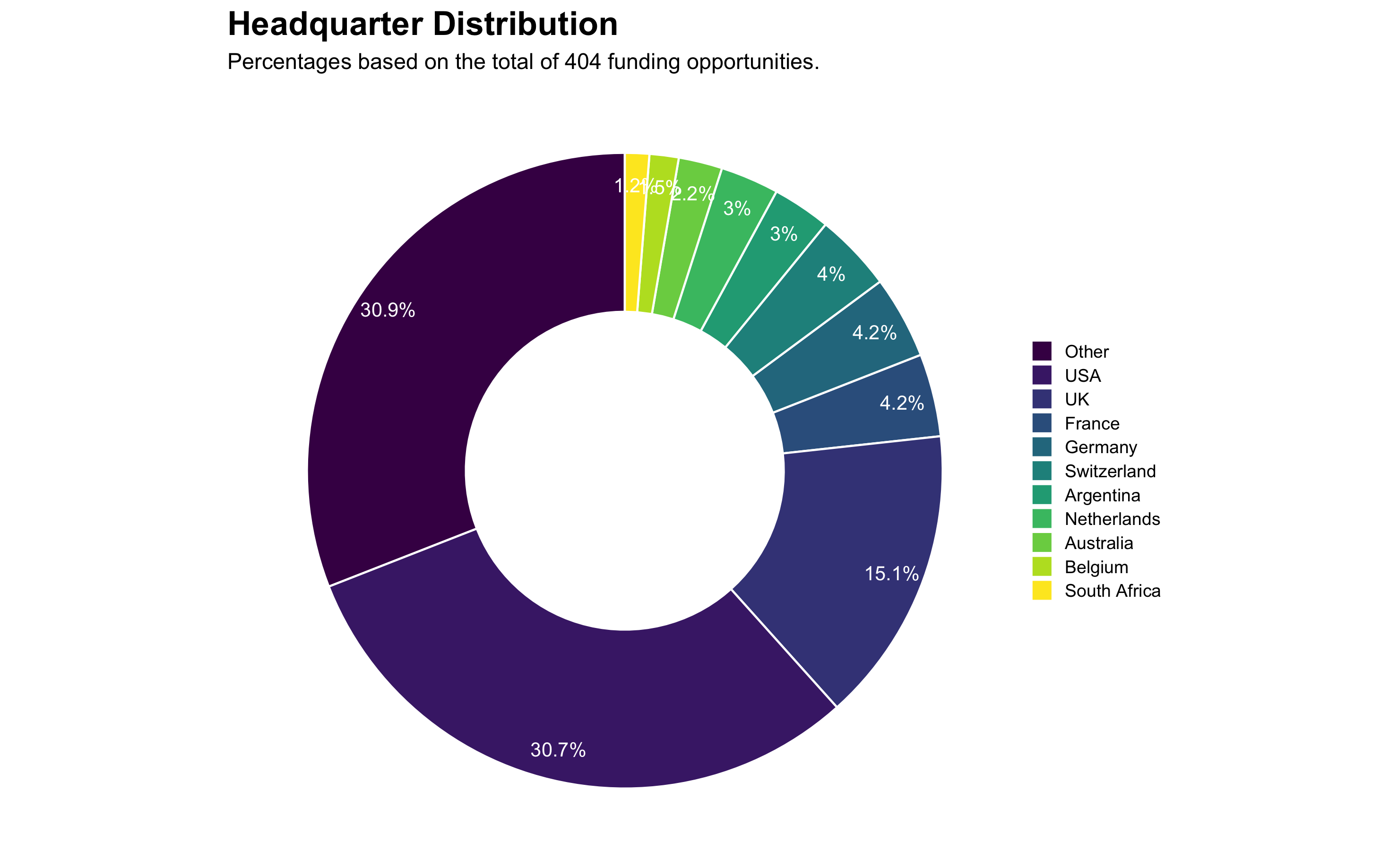
404 funding opportunities are provided by organizations typically headquartered in Western Europe and the United States. However, funds are directed towards projects in different regions.
Most organizations providing funding are solely headquartered in the United States (30.7%), followed by Western Europe. In detail, 15.1% of the organizations are solely headquarted in the United Kingdom, 4.2% in Germany, 4.2% in France, and 4% in Switzerland. Together, these five countries account for 58.2% of all organizations. Three organizations are co-headquarted in two different countries: one in the United States and Switzerland, the other in the United Kingdom and Singapore, and the other in Kenya and Italy.
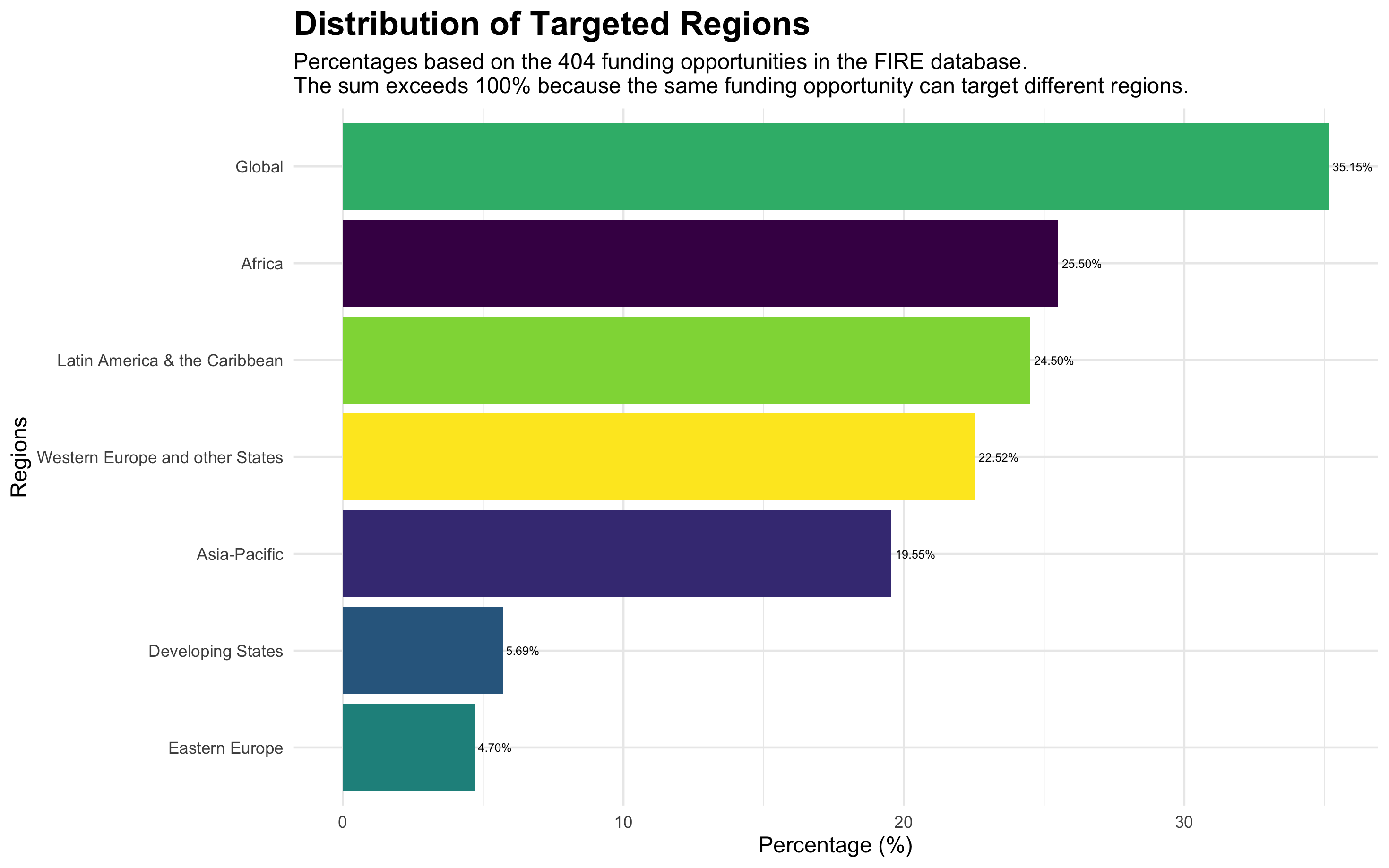
While 35.15% of the funding opportunities have a global scope, some funding opportunities focus on specific regions. 25.5% explicitly mention at least one African country, 24.5% explicitly cover Latin America and the Caribbean, and 22.52% mention at least one country in Western Europe, the United States, Canada, New Zealand or Australia. Asian and Pacific countries are the explicit target of 19.55% of the funding opportunities. Moreover, 5.69% of the funding opportunities are focused on developing countries, in general terms3.
Grants predominate among biodiversity finance opportunities
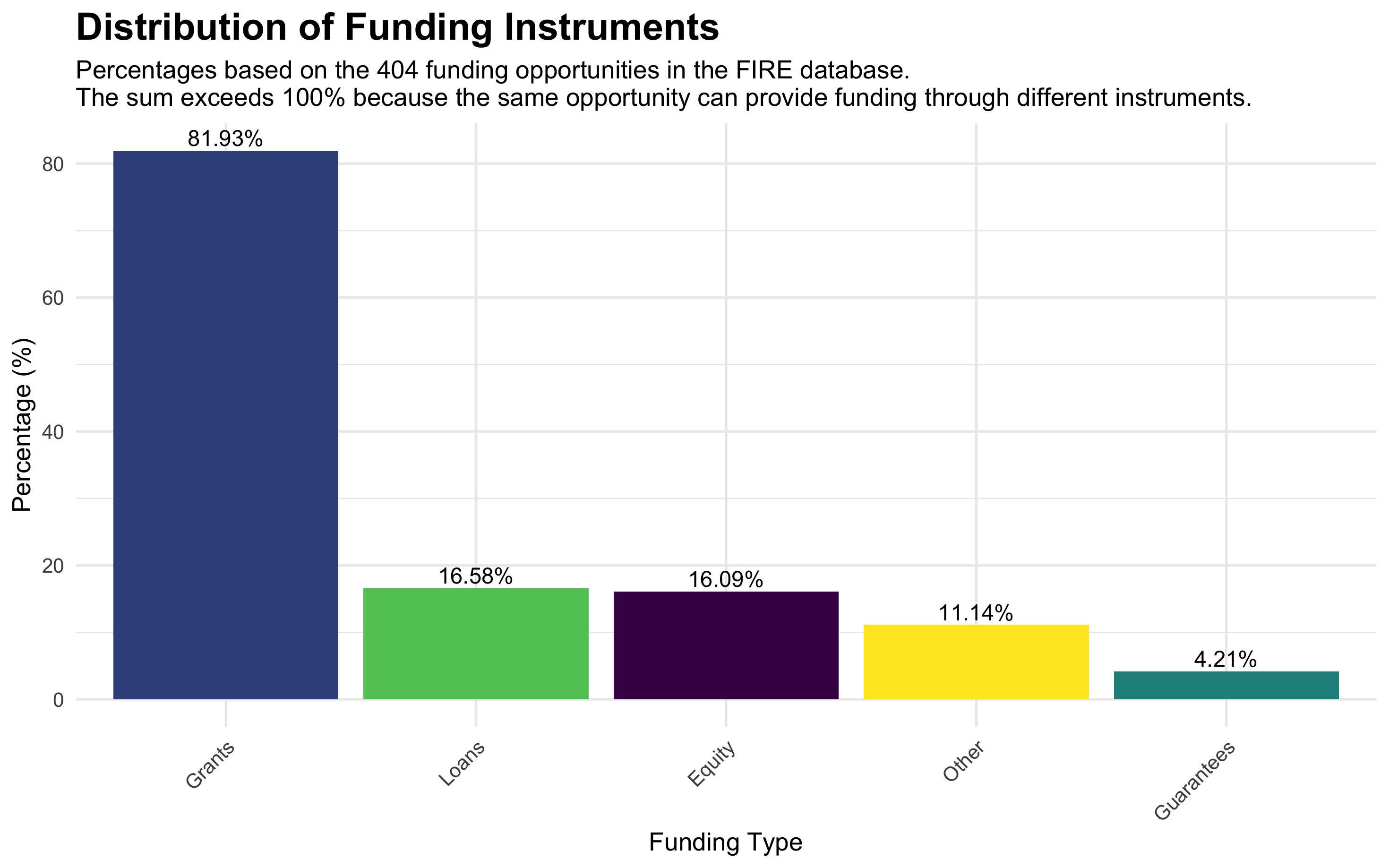
The majority of funding opportunities (81.93%) offer grants, which typically consist of non-refundable funds. The next most common funding instruments, loans (debt to be repaid with interest) and equity (investment in exchange for shared ownership), are offered by 16.58% and 16.09% of the opportunities, considerably lower than grants. It is interesting to note that only 4.21% of the opportunities provide guarantees, which usually have a catalytic impact by helping project developers secure funding from other sources.
These numbers are aligned with current differences between biodiversity and climate finance. While there is significant space for overlap between these two landscapes through funding opportunities that simultaneously contribute to climate mitigation or adaptation and biodiversity conservation, equity is usually less present in biodiversity than in climate finance. The United Nations Environment Programme (UNEP)'s study State of Finance for Nature 20234 shows that nature-positive financial flows are mainly public and go mostly to the protection of biodiversity and landscapes. As this often involves public-owned lands or shared-ownership among Indigenous Peoples and local community associations, equity investments are less common. Meanwhile, data from the Climate Policy Initiative5 reveals that development finance equity and loans accounted for almost half of all climate finance in 2023.
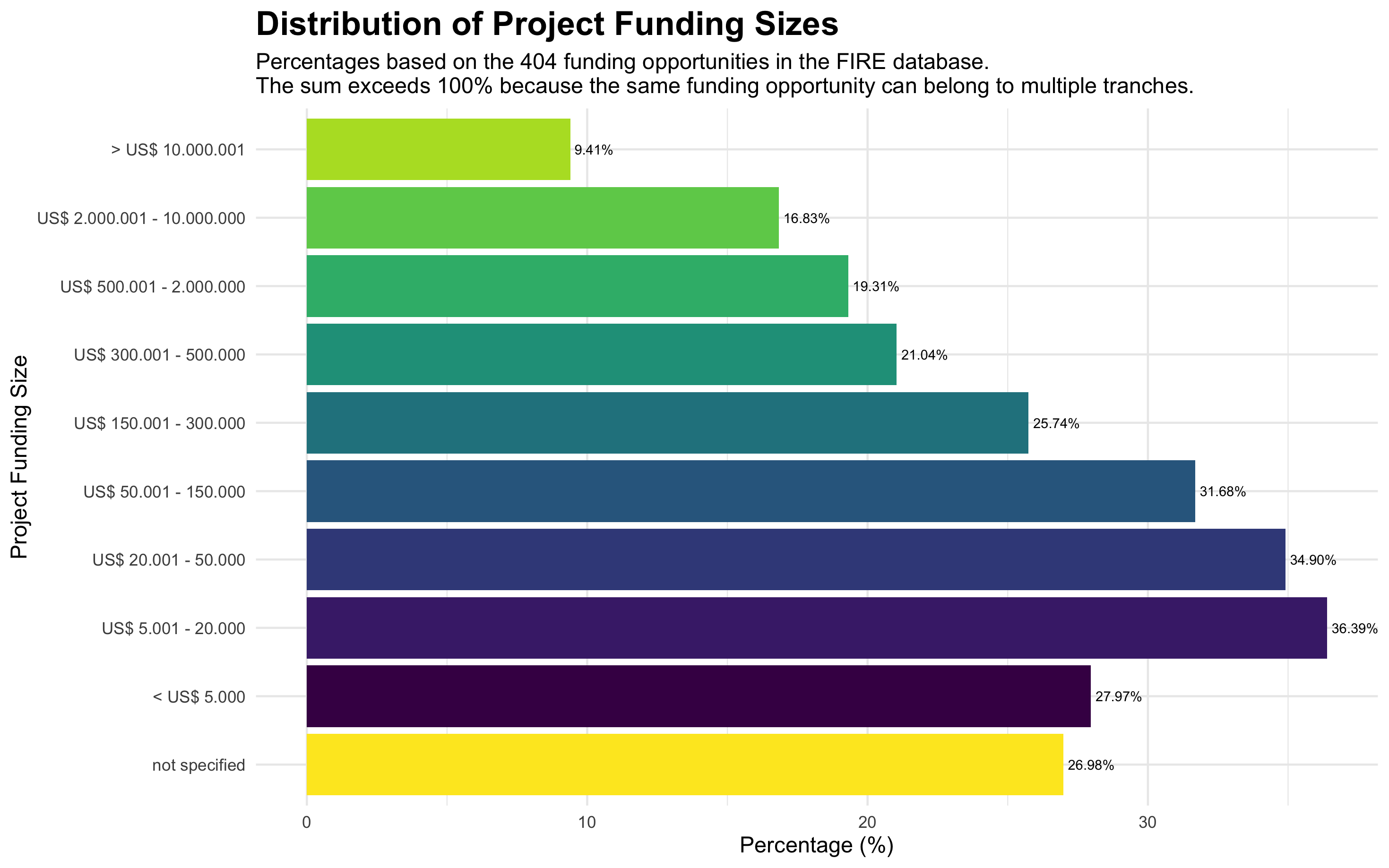
52% of the funding opportunities target projects with needs of up to USD 150,000
When it comes to the amount of funding provided per contract, most funding opportunities (36.39%) offer support in the USD 5,001 to USD 20,000 tranche. The next most common ranges are USD 20,001-USD 50,000 and USD 50,001-USD 150,000. They represent 34.9% and 31.68% of funding opportunities, respectively. The range up to USD 50,000 is the fourth most common, accounting for 27.97% of funding opportunities. Altogether, more than half of the opportunities target funding needs of up to USD 150,000. This is expected given the prevalence of grants, which usually involve smaller amounts than loans and equity.
NGOs are the most common type of organization eligible to receive funding
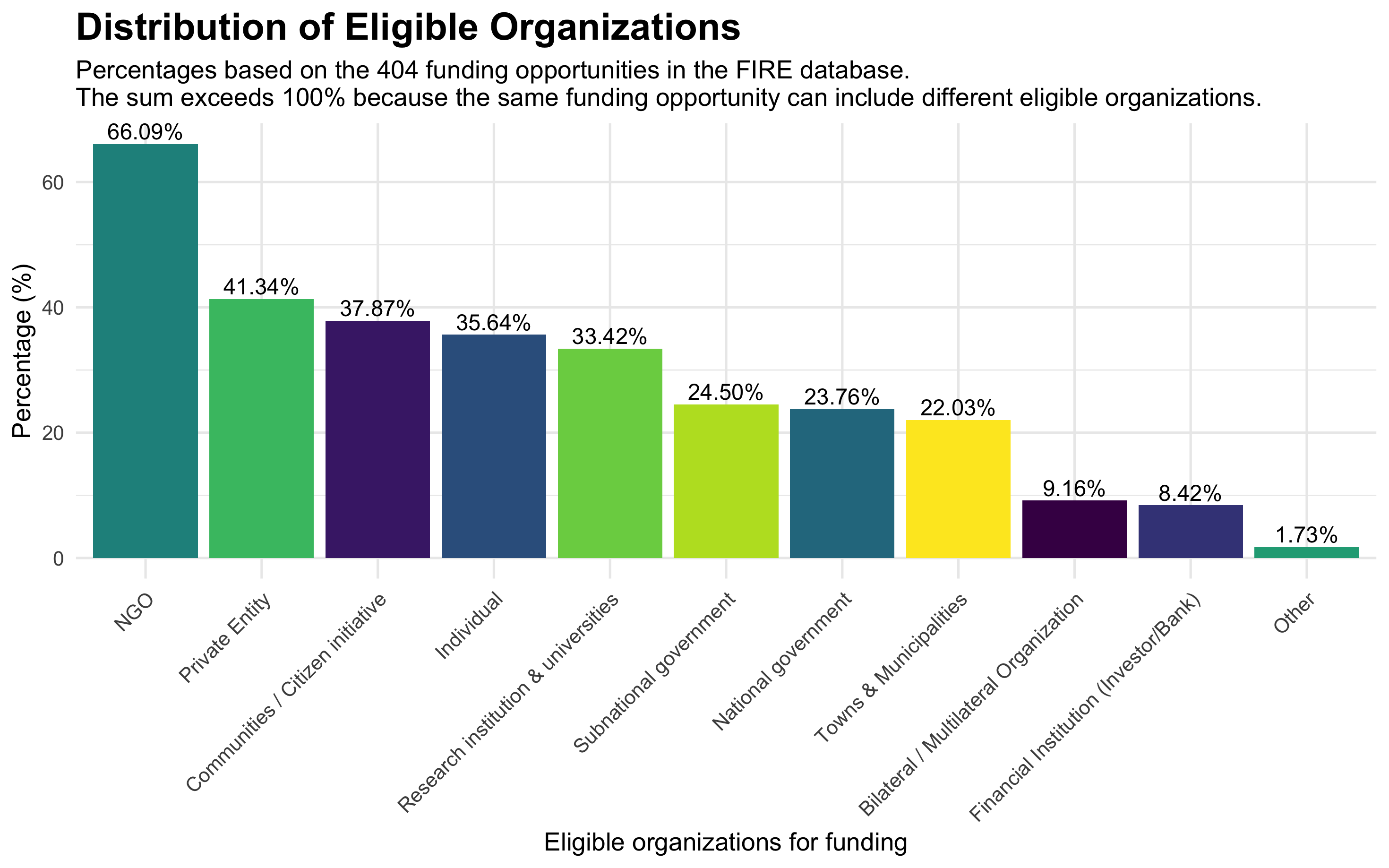
Most biodiversity finance opportunities target non-profit or civil society organizations, which are eligible to apply for 66.09% of them. Private entities come next in line, accessing 41.34% of the opportunities. They are succeeded by communities and citizen initiatives (37.87%), individuals (35.64%), research institutions & universities (33.42%), subnational governments (24.5%), national governments (23.76%), and towns and municipalities (22.03%).
Protected areas and other conservation measures are the priority among funding opportunities
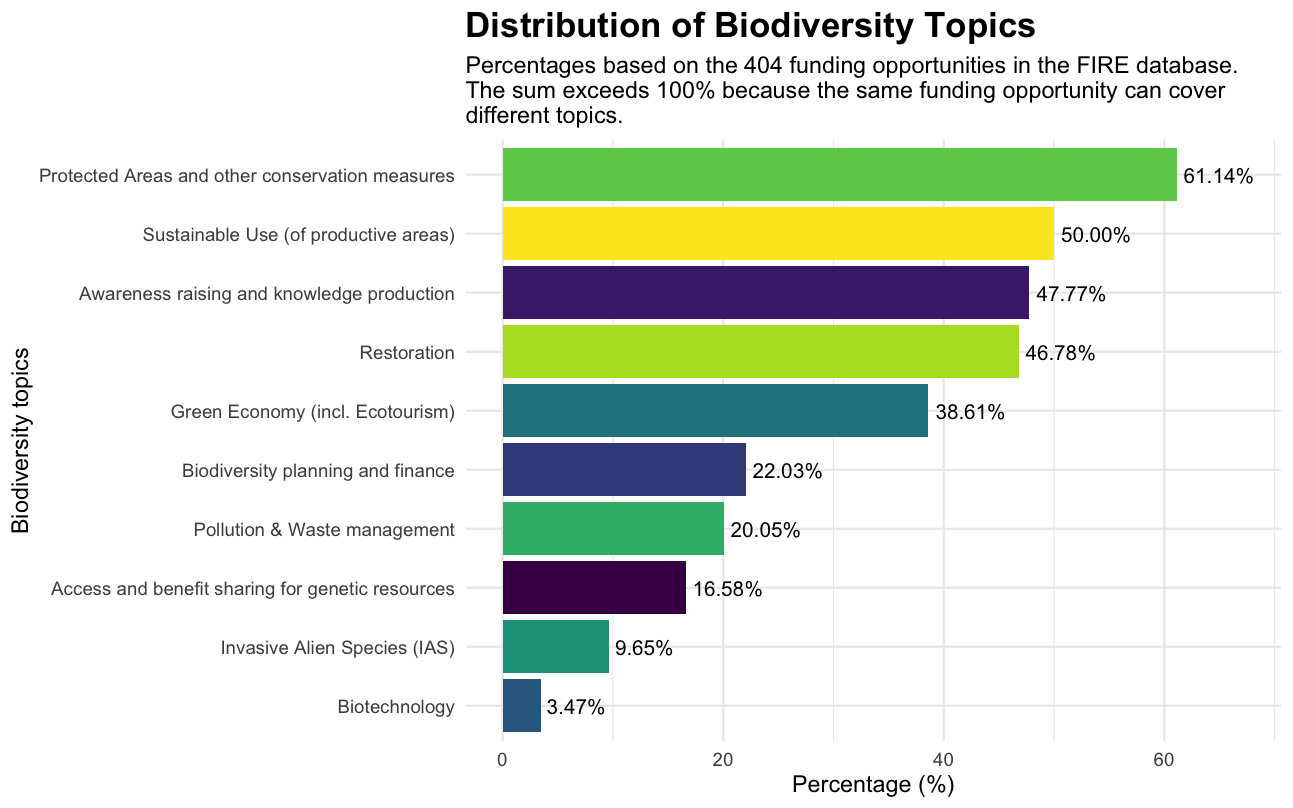
Out of 398 funding opportunities, 61.14% focus on supporting protected areas and other conservation measures. 50% target the sustainable use of protected areas, 47.77% address awareness raising and knowledge production activities, 46.78% focus on restoration, and 38.61% support green economy initiatives such as ecotourism. It is important to note that these categories are not mutually exclusive, and a single funding opportunity can cover different biodiversity topics. Other topics such as biodiversity planning, pollution and waste management, access and benefit sharing for genetic resources, invasive alien species, and biotechnology are considerably less prioritized.
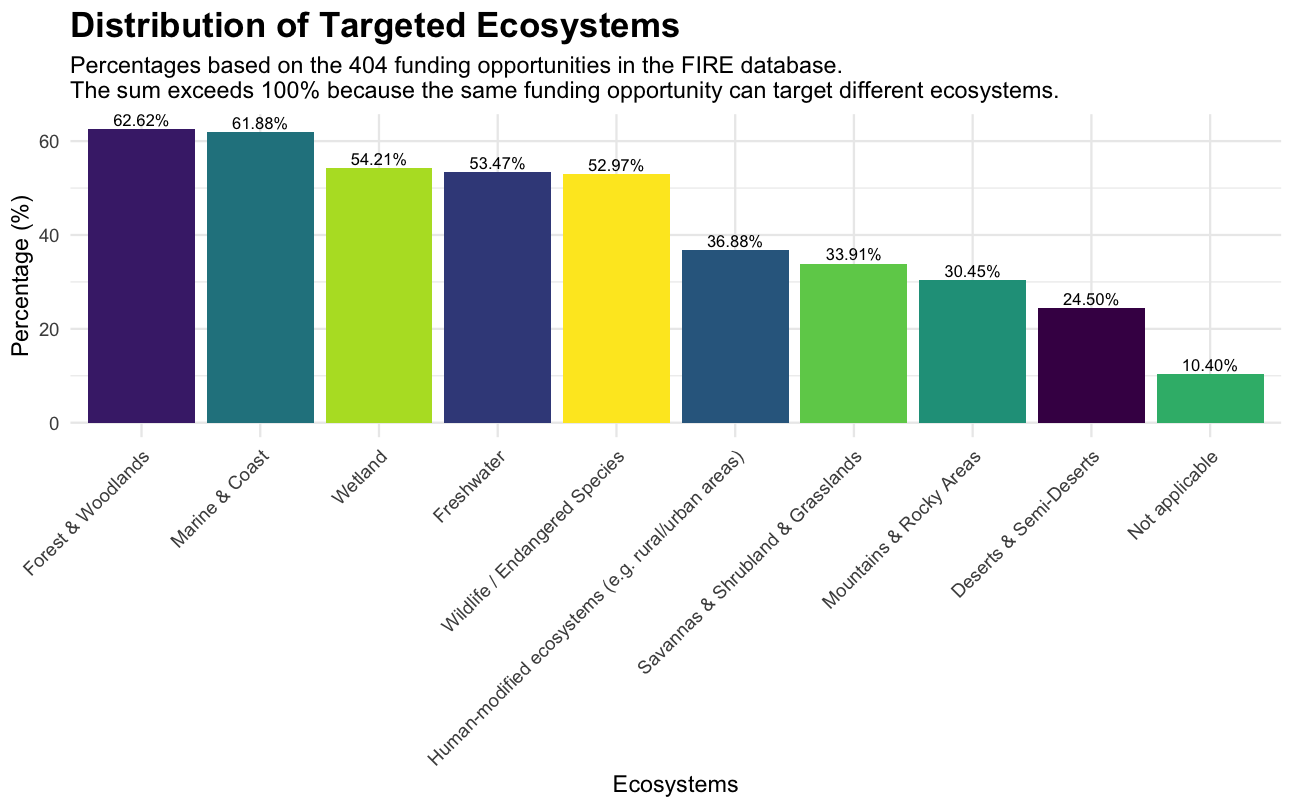
Regarding particular ecosystems, forests and woodlands are the focus of most opportunities (62.62%), followed by marine and coastal ecosystems (61.88%). Wetlands, freshwater, and wildlife/endangered species are also fundable by over half of the funding opportunities.
More than half of the opportunities do not have particular consideration for socially vulnerable groups
Indigenous peoples and local communities (IPLCs), women, girls, children, youth, and people with disabilities are key actors in conservation. Target 22 of the Kunming-Montreal Global Biodiversity Framework6 advocates for their participation in conservation decision-making and access to information. Target 23 emphasizes the importance of a gender-responsive approach for biodiversity action, while Target 19 highlights the role of IPLCs' collective actions in supporting the mobilization of additional biodiversity finance.
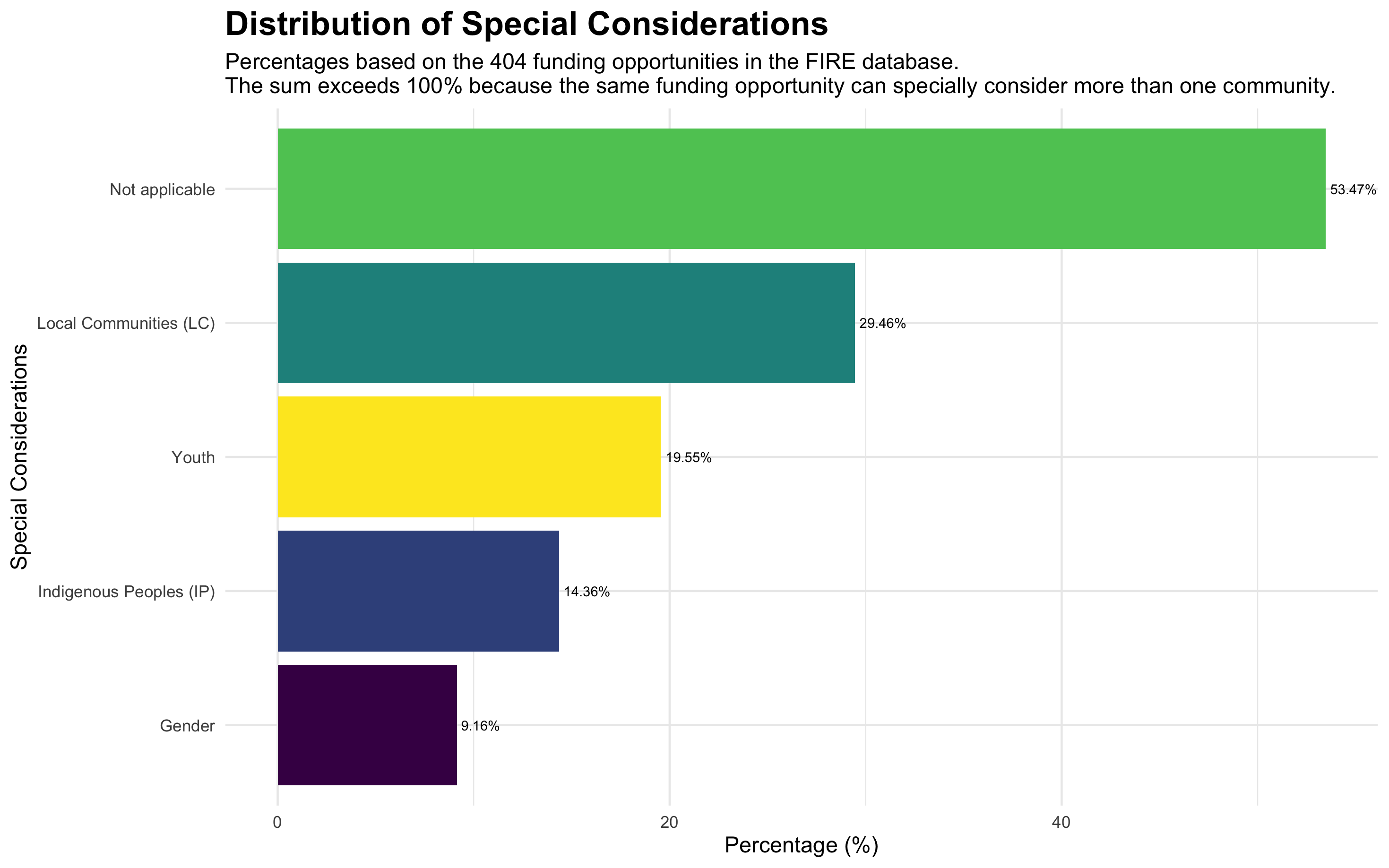
Despite this, 53.47% of the mapped funding opportunities do not specifically consider any socially vulnerable group. Among those that do, 29.46% prioritize local communities, 19.55% focuses on youth, and 14.36% on Indigenous peoples. Only 9.16% of opportunities adopt a gender-responsive approach.
References:
Climate Policy Initiative (2025). Global Landscape of Climate Finance 2025. https://www.climatepolicyinitiative.org/publication/global-landscape-ofclimate-finance-2025/
Convention on Biological Diversity. (2022). Kunming-Montreal Global Biodiversity Framework. https://www.cbd.int/gbf
United Nations Environment Programme (2023). State of Finance for Nature: The Big Nature Turnaround – Repurposing $7 trillion to combat nature loss. Nairobi. https://doi.org/10.59117/20.500.11822/44278
Footnotes
1 United Nations Environment Programme (2023). State of Finance for Nature: The Big Nature Turnaround – Repurposing $7 trillion to combat nature loss. Nairobi. https://wedocs.unep.org/items/46acff16-5a7b-4e51-8f14-aa87f56bd4f4↩
2 It is important to note that the current article summarizes data on funding opportunities for biodiversity included in the FIRE database as of December 2025. Although it contributes to measuring and assessing the current landscape of biodiversity finance, this article per se does not include all finance flows for biodiversity worldwide and in all its forms. As FIRE compiles funding opportunities that project owners can apply for, it does not consider some internal financial mechanisms such as ecological fiscal transfers between different levels of government within a country.
↩
3 Terms include “Developing countries”, “Official Development Assistance (ODA) eligible countries”, “Low-income economies”, “Lower-Middle income economies”, “Coastal DAC countries”, “Coastal Least Developed Countries”, and “Small Island Developing States (SIDS)”.
↩
4 United Nations Environment Programme (2023). State of Finance for Nature: The Big Nature Turnaround – Repurposing $7 trillion to combat nature loss. Nairobi. https://wedocs.unep.org/items/46acff16-5a7b-4e51-8f14-aa87f56bd4f4
↩
5 Climate Policy Initiative (2025). Global Landscape of Climate Finance 2025. https://www.climatepolicyinitiative.org/publication/global-landscape-ofclimate-finance-2025/
↩
6 Convention on Biological Diversity. (2022). Kunming-Montreal Global Biodiversity Framework. https://www.cbd.int/gbf
↩