Funding for Indigenous Peoples and local communities: Value, Challenges and Funding Examples
 Email
Email Linkedin
 Bluesky
 Mastodon
Indigenous Peoples and local communities are among the most effective ecosystem guardians but often lack support. The FIRE platform connects them with targeted funding opportunities to help them overcome challenges. Explore the database and discover resources to achieve protecting biodiversity goals.
By An Feng
What is the value of Indigenous Peoples and local communities in biodiversity?
Indigenous Peoples and local communities have a deep connection with the natural environment. For centuries, the traditional knowledge and way of life they have developed have made them the most effective guardians of the ecosystem. Although Indigenous Peoples and local communities only make up 6% of the global population, their lands overlap with 43% of all key biodiversity areas, protecting thousands of plants and animals (WRI, 2024).
This success is not an accident. Research consistently shows that territories managed by Indigenous Peoples and local communities maintain healthier ecosystems compared to other areas. For example, research in the Amazon Basin showed a drastic difference in carbon loss. Indigenous territories experienced a net loss of just -0.1%, whereas areas without formal protection or indigenous stewardship saw a much higher loss of –3.6%. (PNAS, 2019). In Nepal, the success of the Community-Managed Forest (CFM) model is striking, having helped to increase the nation’s total forest from 29% to 46% (World Bank, 2025). This happens because their culture, beliefs, and way of life are all tied tightly to their ancestral lands. Over generations, they pass down and practice their traditional stewardship of land. This stewardship is built on the belief in only taking what is needed, using it wisely, and in return, making sure nature stays healthy for generations to come. The land and the forest are simply better off under their care. This is the reason why when Indigenous Peoples and local communities thrive, biodiversity thrives with them.
The relationship between Indigenous Peoples and local communities and biodiversity represents a profound symbiotic connection, which calls for even greater recognition and action. As the most important guardians of ecological heritage, Indigenous Peoples and local communities are in the best position to lead the way in protecting biodiversity. The traditional knowledge and sustainable practice they possess are helpful in solving the current environmental problems.
What kind of challenges do Indigenous Peoples and local communities face while safeguarding biodiversity?
While this depends on many circumstances, there are several challenges that many Indigenous Peoples and local communities face:
- Unclear Land and Resource Rights
- Lack of Funding and Resources for Conservation
- External Development Pressure
- Marginalization in decision-making
What opportunities can Indigenous Peoples and local communities find on FIRE?
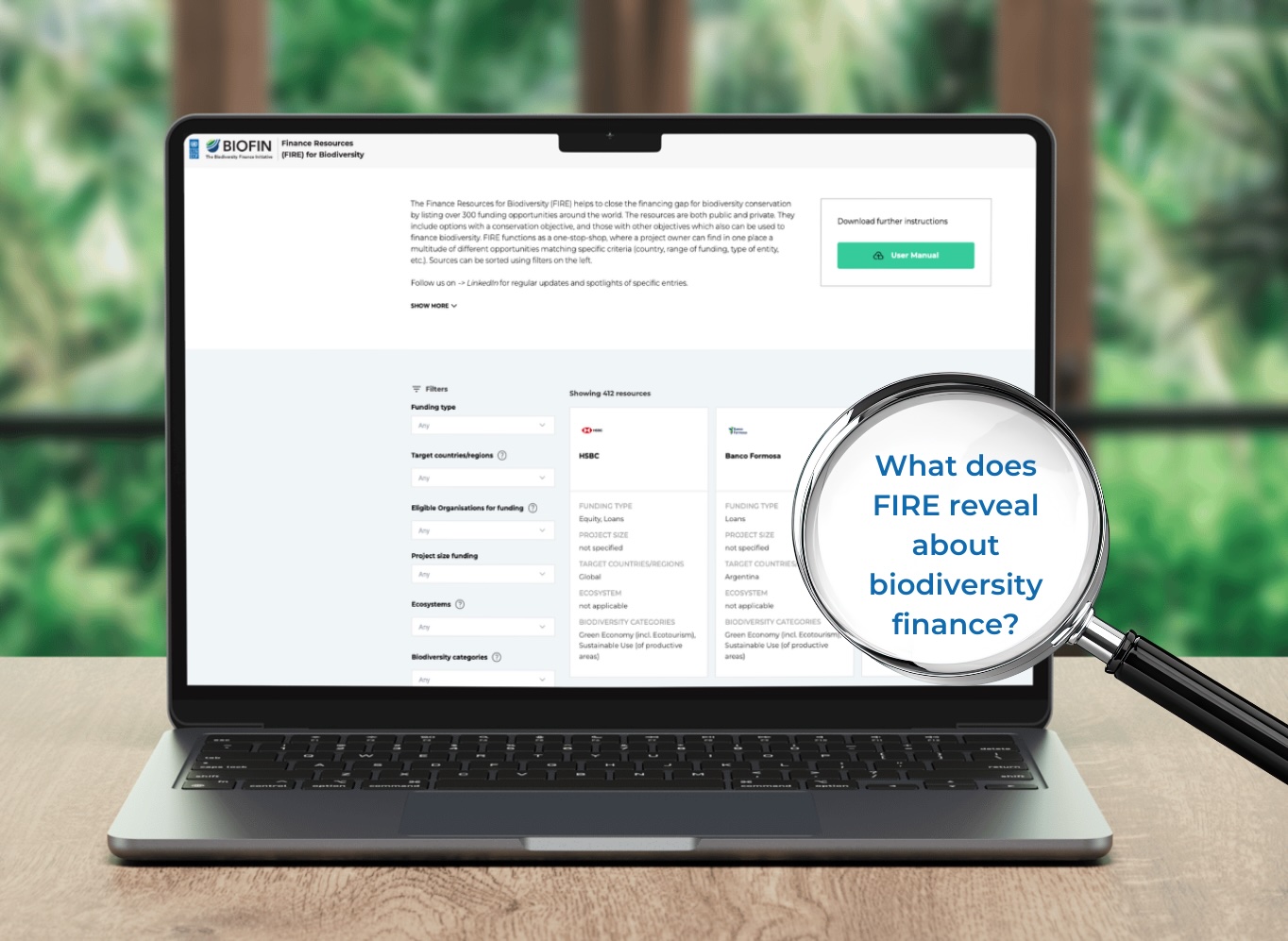
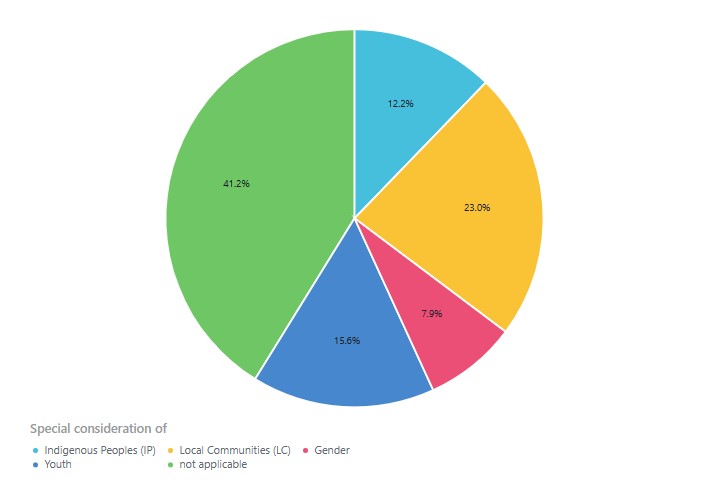 Currently, FIRE lists over 400 funding opportunities for biodiversity. Within the advanced search, there are specific filters for “Indigenous Peoples” and “local communities” to highlight opportunities focused on these groups. Specifically, there are 128 opportunities (23.0%) open to local communities and 68 that give special consideration to Indigenous Peoples (12.2%).
FIRE aggregates diverse funding opportunities. Some, like the Amazon Fund is focusing only on one country (Brazil) and funds specifically Protected Areas and other conservation measures, restoration and sustainable production. Others, like the Christensen Fund, operates globally and is dedicated to support Indigenous People and their rights related to land, resources and governance. FIRE also lists funders like Global Centre on Biodiversity for Climate (GCBC), which has supported impactful projects such as an indigenous-led project in Panama. The support has enabled communities to restore degraded forests using traditional knowledge and scientific approaches. With this funding, they planted valuable native trees on degraded lands, creating sustainable income while reviving local biodiversity. The FIRE platform exists to help individuals or organizations working with or for biodiversity to discover and connect with such resources. We invite Indigenous Peoples and local communities to explore the database, find suitable funding opportunities for the community and nature, and take the next step in strengthening their vital role as guardians of our planet’s biodiversity.
References
- Global Centre on Biodiversity for Climate, 2025: ForRest-ERS: Forest Restoration on Indigenous Lands: Restoring Biodiversity for Multiple Ecosystem Services, Community Resilience and Financial Sustainability through Locally Informed Strategies and Incentives https://www.gcbc.org.uk/project/forest-restoration-on-indigenous-lands-restoring-biodiversity-for-multiple-ecosystem-services-community-resilience-and-financial-sustainability-through-locally-informed-strategies-and-incentives/
- Marlowe Starling, Mongabay, 2025: In Panama, an Indigenous-led project rewrites the rules of reforestation. https://news.mongabay.com/2025/05/in-panama-an-indigenous-led-project-rewrites-the-rules-of-reforestation/
- Walker, Wayne et al, 2019: The role of forest conversion, degradation, and disturbance in the carbon dynamics of Amazon indigenous territories and protected areas https://www.pnas.org/doi/full/10.1073/pnas.1913321117
- World Resources Institute, 2023: 8 Facts about Community Land and Biodiversity Conservation https://files.wri.org/d8/s3fs-public/2023-04/8-facts-community-land-biodiversity-conservation.pdf
- World Resources Institute, 2024: Why Securing Indigenous Land Rights Protects Biodiversity https://www.wri.org/insights/indigenous-and-local-community-land-rights-protect-biodiversity
- World Resources Institute: Indigenous Peoples and Local Communities https://www.wri.org/equitable-development/indigenous-peoples-local-communities
- Worldbank, 2025: May the Forest be With You: Mapping Nepal’s Forest Landscapes and Livelihoods https://documents.worldbank.org/en/publication/documents-reports/documentdetail/099102025185027763